With the 2027 Regular Session just a few months away, members of the General Assembly spent another busy week at the Capitol reviewing state agency budgets and examining ways to address prison overcrowding. Pre-Session Budget Hearings continued with a closer look at where agencies are requesting additional funding and why.
Education was a major focus this week. State officials reported that many Arkansas public school districts are experiencing declining enrollment, creating financial challenges as funding is tied in part to student numbers. To help those districts adjust, the Department of Education is requesting $52 million annually in declining enrollment assistance. That’s a $28 million increase over the previous funding level.
The department is also requesting an additional $70 million for the Educational Freedom Account program, bringing proposed funding to $379.4 million.
The Department of Human Services also presented its budget requests. The Division of Children and Family Services, which oversees child protective services, foster care, and adoption programs, is seeking $330 million in spending authority, an increase of $14.2 million over the current fiscal year. The Division of Youth Services, which provides rehabilitation and support services for young people involved in the juvenile justice system, requested $84.3 million, an increase of $1.1 million. Members authorized drafting appropriation bills for both divisions, along with the appropriation for Medicaid, which would maintain its current spending authority.
Budget hearings will continue November 6 with a review of the Governor’s balanced budget proposal.
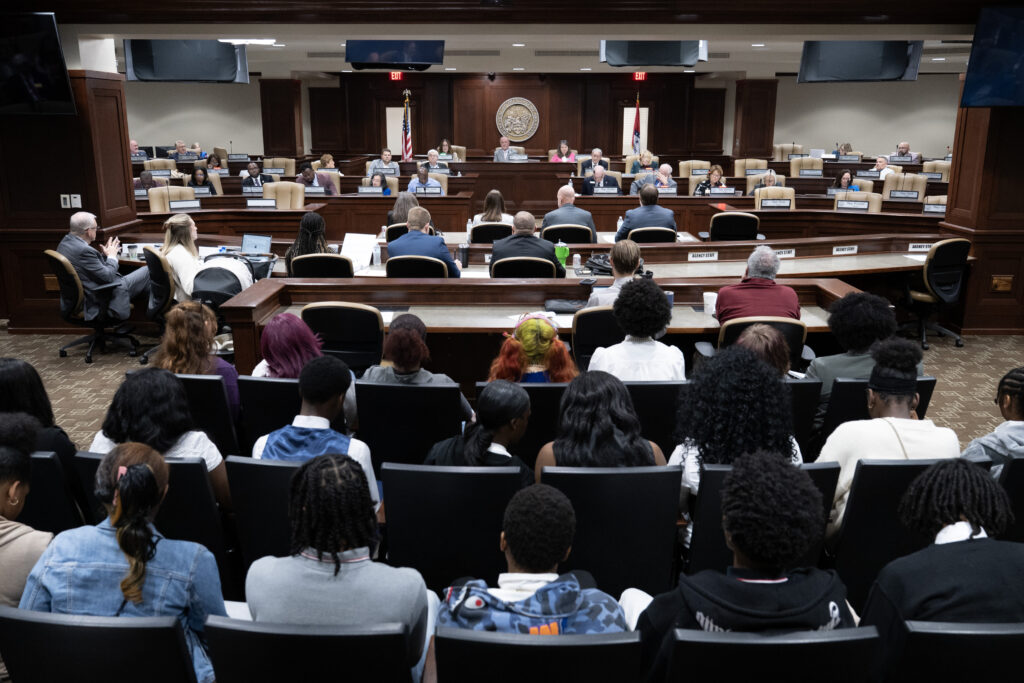
Meanwhile, the House and Senate Judiciary Committees met to discuss another pressing issue: prison overcrowding. Arkansas has more than 19,000 state inmates, including over 2,300 being held in county jails while awaiting space in state prisons. Operating the prison system cost taxpayers more than $450 million last fiscal year.
Members heard about programs aimed at reducing repeat offenses while protecting public safety. One example was Smart Justice Services, which helps connect individuals involved in the court system with employment, housing, transportation, and treatment services. The committees also discussed four draft bills addressing supervised housing, probation and parole, criminal record sealing, and potential release options for certain older inmates. These proposals remain under consideration.
From education funding to prison overcrowding, these discussions are helping members better understand the challenges facing our state and the decisions ahead. The work happening now will help shape the legislation and budget priorities considered when the General Assembly convenes in January.